




The Gap Everyone Ignores
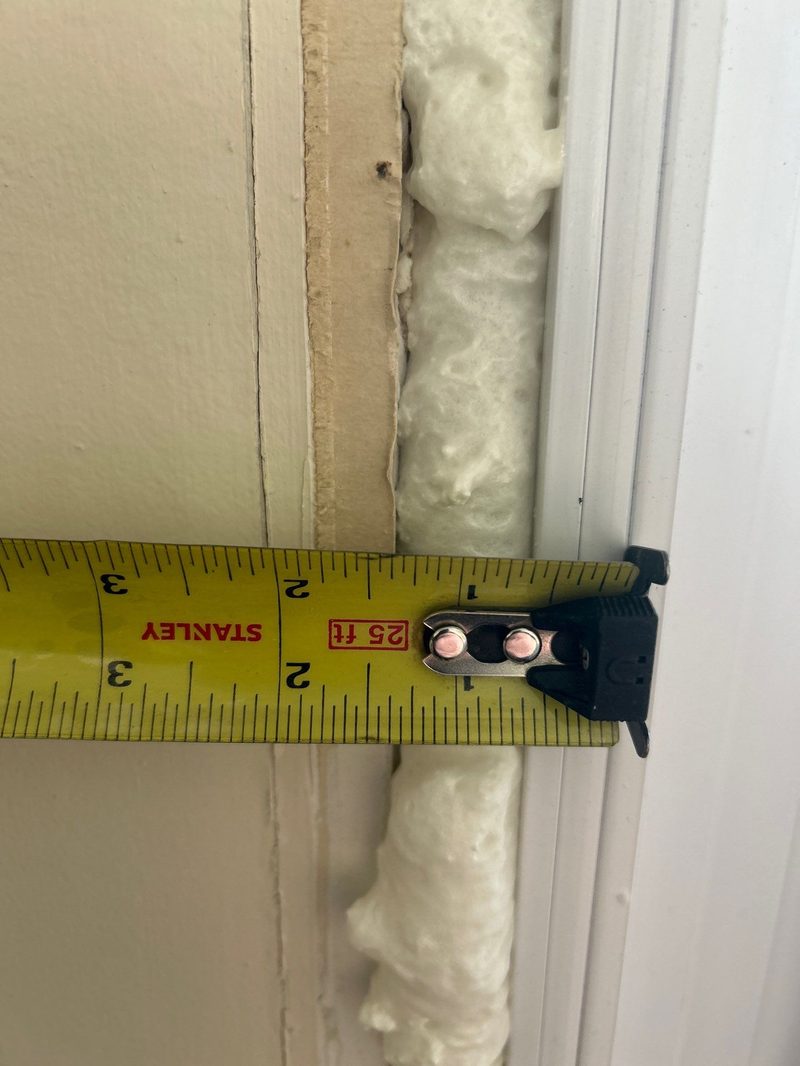
Between every window frame and the rough opening sits a gap — typically 10-20mm on each side. This gap must do three jobs simultaneously: insulate (prevent heat transfer), air seal (prevent drafts), and allow the frame to move with temperature. Most installers stuff it with fiberglass batt or spray expanding foam without precision. SAWDAC specifies exactly how this gap should be sealed.
Insulation
Prevents heat transfer through the gap. Polyurethane foam provides R6 per inch — better than the wall around it.
Air Seal
Stops drafts. A continuous foam bead creates an air-tight barrier. Fiberglass batt alone does NOT stop airflow.
Vapour Control
Prevents warm moist indoor air from condensing inside the wall. Foam at 1.5" thickness provides adequate vapour resistance.
The SAWDAC Foam Method
CSA-A440.4-07 Technical Standard
Clean Gap, Correct Size
- • Gap must be 9.5-19mm at jambs, 12.5-22mm at head/sill per CSA-A440.4-07
- • Too narrow: no room for foam or expansion
- • Too wide: foam can't bridge effectively, multiple passes needed
- • Existing insulation, vapour barrier remnants cleared from gap
Two-Bead Application
- • Bead 1: Applied at EXTERIOR face of window frame (~25mm/1" depth)
- • Bead 2: Applied at INTERIOR face (~25mm/1" depth)
- • Space left between beads for expansion
- • Low-expansion foam ONLY — high-expansion foam can bow frames and void warranty
Cure Time
- • Allow foam to expand and cure BEFORE trimming or applying capping
- • Cold weather warning: Below 5°C, foam cures much slower (up to 8 hours)
- • Cold foam froths less — appears less but expands later (delayed expansion risk)
- • GreenFox keeps foam cans warm and adjusts application for Calgary winters
Trim and Seal
- • Excess foam trimmed flush with frame
- • Sealant applied over shim locations
- • Interior: jamb extension installed, sealed to frame
- • Exterior: capping or trim sealed with backer rod and sealant
Foam vs. Batt — The Numbers
| Property | Fiberglass Batt | Polyurethane Foam |
|---|---|---|
| R-Value per inch | R3.5 | R6.0 |
| Air Sealing | ❌ None | ✅ Complete |
| Vapour Control | ❌ None | ✅ At 1.5"+ |
| Moisture Resistance | ❌ Absorbs water | ✅ Resists moisture |
| CSA-A440.4-07 | Not as primary seal | ✅ Standard Method |
R-Value Performance
Air Sealing Effectiveness
Calgary Cold-Weather Foam Science
Calgary installs below −20°C require special foam handling. Here's what we do differently:
Warm Storage
Foam cans stored in heated vehicle until needed. Cold foam = poor expansion.
Controlled Application
Smaller beads in cold weather. Foam expands less initially but continues expanding as it slowly cures.
Extended Cure Time
We allow 4-8 hours cure time in winter vs 1-2 hours in summer. We never trim or cap before the foam is fully cured.
Material Selection
We use foam rated for cold-weather application. Not all foam products perform the same below freezing.
The Draft Test
Without Energy Seal
Gap Temperature
-15°C
Room Near Window
+12°C
Heating Bill
$$$
With Energy Seal
Gap R-Value
R12
Room Near Window
+21°C
Heating Bill
$
Energy Seal Installation Checklist
Preparation
Application
Curing & Finishing
The seal you can't see is the one that matters most.
If your current windows feel cold near the edges, it's probably not the glass — it's the perimeter seal. We fix that on every install, guaranteed.